Start by choosing the route. Private label means branding an existing Pilates or yoga style with your colours, logo, labels and packaging. A brand collection means planning several styles together, with core and seasonal colours, sizes, packs and replenishment. Advanced development means changing the knit, yarn, fit or sole layout. Then build a small core range from current styles. Align the size bands and grip layouts across it, design one packaging system, approve one complete sample per style, and launch with the lines you can reorder.
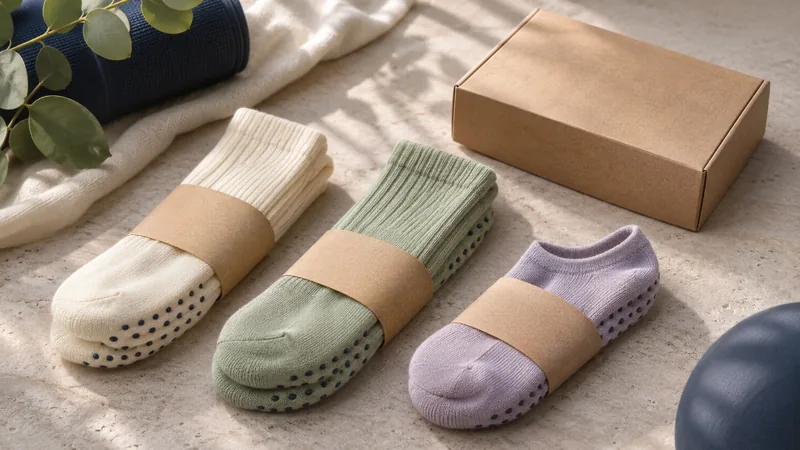
This guide is for wellness brands, boutiques and studio groups developing private label Pilates grip socks. It covers choosing the route, structuring the range, keeping sizes and grip consistent, packaging, samples and growth. The branding service is on our private label page; collection planning is on Pilates grip socks for brands.
Private label starts from a current style reference, and the feasible changes are reviewed before that style is treated as your approved product. For standard grip styles only, the minimum is 50 pairs per style, per colour and per size. Other constructions, embroidery, special grip requirements and custom packaging are quoted separately. Product styles shown on our site are references, not ready-made stock. We make no material or performance claims beyond the confirmed specification.
1. Choose the right route first
| Route | When it fits | Where to start |
|---|---|---|
| Private label | You brand an existing Pilates or yoga style: colours, logo, size labels, retail packaging. | Brand an existing style |
| Brand collection | You plan several styles together: customer, core and seasonal colours, size mix, packaging and replenishment. | Plan a collection |
| Advanced development | You change the knit, yarn blend, cuff fit or height, or the sole layout, from a reference or brief. | Review advanced development |
Many brands combine routes: a private label launch of two existing styles, planned as a collection, with one developed style added later. Our route comparison gives typical examples of each.
2. Define the customer and channel
Write down who buys and where before choosing styles:
- Customer: Pilates, yoga or barre; studio members, home practitioners or gift buyers.
- Channel: studio reception, wellness retail, your online store, or distributors.
- Market: countries and size systems you will label in.
- Role in the brand: a core product you will always stock, or a seasonal addition.
The channel decides the pack; the customer decides the styles and sizes.
3. Build a small core range
A first range is easier to sample, launch and restock when it uses a few current references:
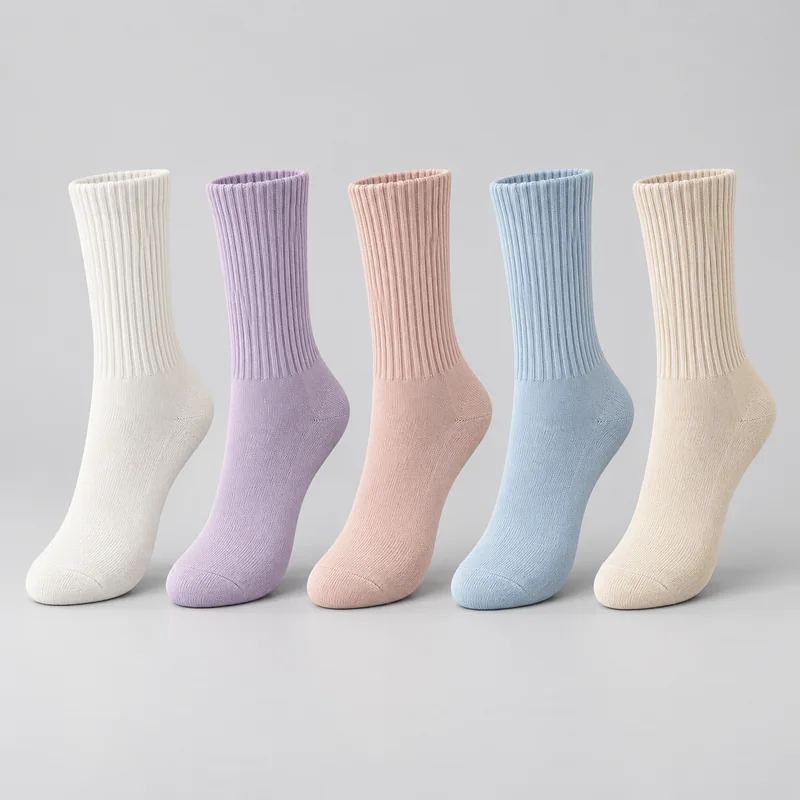
Custom Ribbed Crew Yoga Grip Socks
A closed-toe ribbed crew style with circular sole grip dots. Plan pastel colours, XS to L sizes and branded packaging for studio and wellness retail.
View Product Details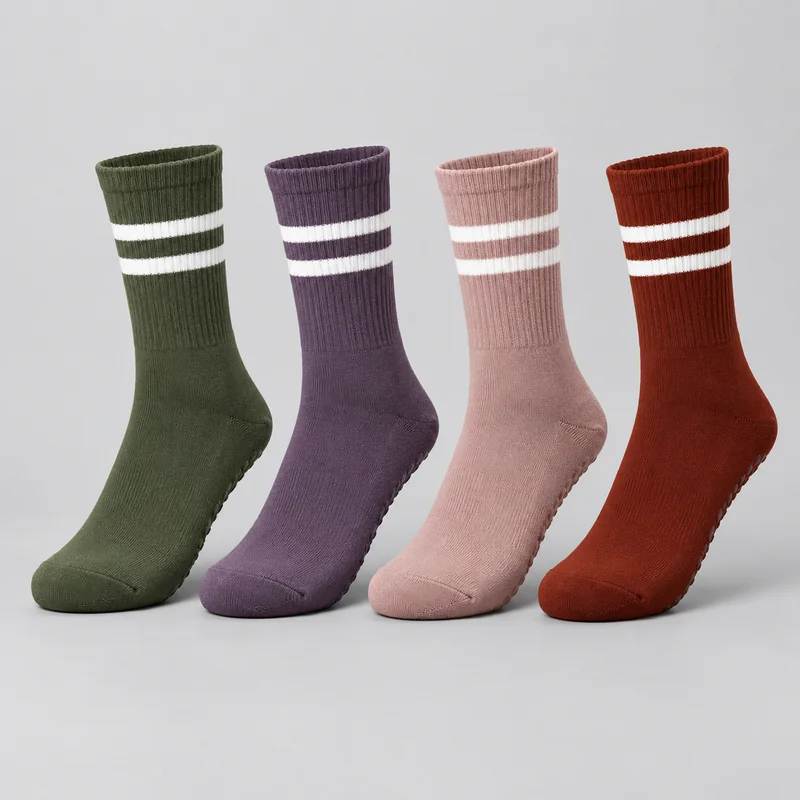
Custom Striped Crew Yoga Grip Socks
A ribbed crew style with two contrasting cuff stripes and circular sole grip dots. Plan custom colours, S to XL sizes and branded studio retail packs.
View Product Details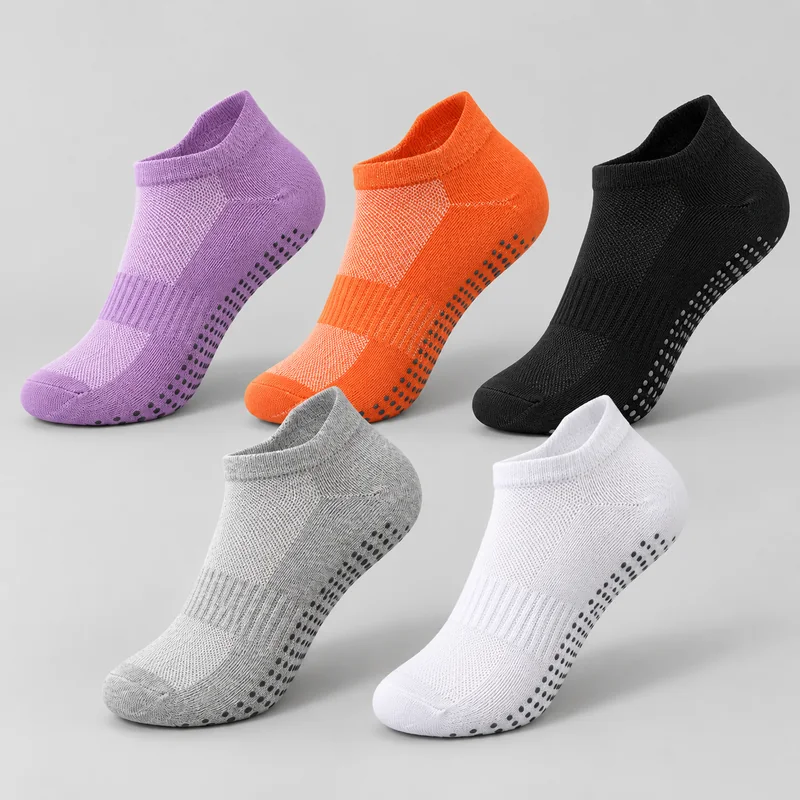
Custom Low-Cut Mesh Yoga Grip Socks
A low-cut style with mesh-knit zones, ribbed midfoot and circular sole grip dots. Develop custom colours, XS to L sizes and branded studio retail packs.
View Product Details- One hero style: often a crew, which carries the brand most visibly.
- One alternative height: a low-cut style for customers who want less fabric.
- Optional yoga or barre style: a five-toe reference from the yoga and barre range, quoted per project.
- Core colours first: two or three shades you expect to reorder, with seasonal colours later on the same construction.
Every style adds a sample, size lines and a reorder record. Our silhouette guide compares the current Pilates styles, including why cross-strap starts as a feasibility brief.
4. Keep sizes and grip consistent across the range
Customers expect a range to behave like one product family:
- Size bands: current styles plan different letter ranges (XS to L on the ribbed crew and low-cut mesh, S to XL on the striped crew). Line them up by foot length before printing a shared size chart. See our size record.
- Grip language: use related patterns and colours across styles where it suits the product, and confirm the material and layout on each sample. Our studio grip guide explains what to confirm.
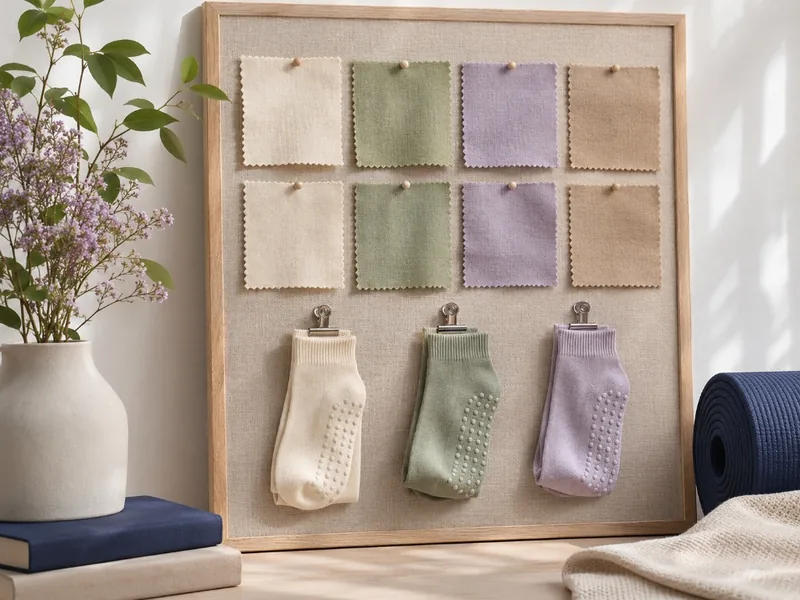
- Colour standards: approve each shade on the knitted sample and keep it as the reference for every style it appears in.
5. One packaging system
A single packaging system makes the range read as one brand and keeps artwork manageable:
- One format per channel: for example a belly band or header card for retail, and an individual polybag for online orders.
- Shared design: the same layout for every style, with style name, size and colour in fixed positions.
- Required content: size, confirmed composition, care and barcodes as each market requires.
- Room for seasonal colours: new colours slot into the same pack without new artwork.
Our brand collections page covers retail packaging planning for Pilates ranges, and our guide to logo placement and packaging compares pack formats.
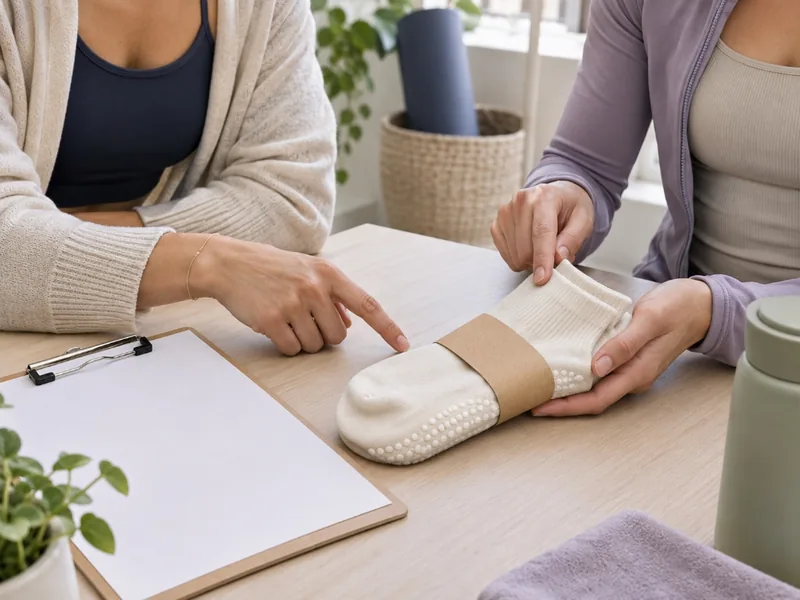
6. One approved sample per style
| Check | Include in your brief | Approve on the sample |
|---|---|---|
| Base style | Current reference or a development brief. | Fit, dimensions, knit and the complete sole. |
| Brand details | Logo artwork, position, colours. | Readability and colour on each size. |
| Pack | Format, label text, barcodes, artwork version. | One complete packed pair per style. |
| Order scope | Pairs per style, colour and size; destination; launch date. | Sample ID, written specification and quotation. |
For standard grip styles, samples take 10–15 working days and bulk production 12–16 working days from confirmed starts; other constructions are scheduled in their own quotation, and transport is additional.
7. Launch quantities and growth
Launch with the lines you can sell through and reorder. Count styles × colours × sizes, apply the minimum for each construction, and check the cash tied up per line. Then grow in this order:
- Replenish what sells from the approved version.
- Add colours on approved constructions.
- Add a height or yoga style that fits the same system.
- Develop a new construction, such as cross-strap, through feasibility and sampling.
Our sizes and reorders guide covers the repeat cycle, and the retail margin guide shows how to check contribution per pair.
Frequently asked questions
What are private label Pilates grip socks?
Branding an existing Pilates or yoga grip sock style with your colours, logo, size labels and packaging. The base style and the feasible changes are confirmed before it becomes your approved product.
How is a brand collection different from private label?
Private label brands one or two existing styles. A brand collection plans several styles together, including core and seasonal colours, size mix, packaging and replenishment.
When do we need advanced development?
When you change the knit, yarn blend, cuff fit or height, or the sole layout. A logo or new retail band alone usually belongs in the private label route.
How many styles should a new Pilates sock brand launch with?
Many brands start with two or three styles, such as one crew and one low-cut, in core colours. Each style needs its own sample, size lines and reorder record.
Does the 50-pair minimum apply to every private label style?
No. It applies to standard grip styles only, per style, colour and size. Other constructions, embroidery, special grip requirements and custom packaging are quoted separately.
Next steps
Compare routes on the private label page, plan the collection on Pilates grip socks for brands, and send your range brief through the quote form.