Base product
Define the use case, sock height, fit direction and knit construction before adding visual branding.
Plan a Pilates and wellness grip sock collection around your customer, class use and retail channel. Choose the core silhouettes, allocate sizes and colours, and set a packaging and replenishment plan.
For a growing grip sock brand, the useful question is not only “Can this style be made?” It is whether the whole product system can be sampled, approved, merchandised and reordered in a controlled way.
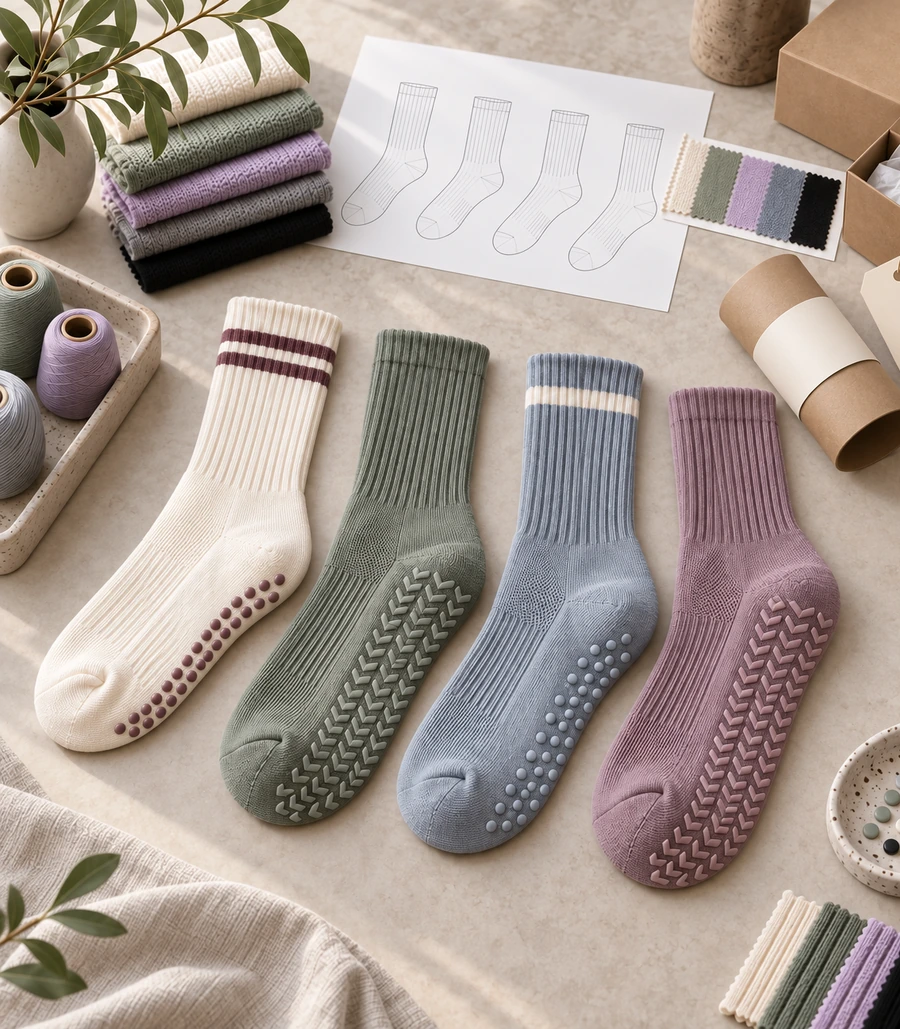
Keep the key product decisions connected. A brand program is easier to grow when the base sock, grip, identity and packaging are planned as one repeatable system.
Define the use case, sock height, fit direction and knit construction before adding visual branding.
Plan coverage, pattern, placement and colour so the grip supports the product rather than feeling added later.
Coordinate body colours, logos, knitted details, labels and visible design cues across the range.
Choose packaging, bands, hangtags, multipacks or boxes that fit the sales channel and assortment structure.
Not every brand needs every category at launch. Start with the strongest commercial directions, then extend into adjacent use cases after the first products are validated.
Core studio and wellness direction with multiple silhouettes, grip options and private-label presentation.
View categoryGrip sock directions for studio and wellness buyers that need product variety without an uncontrolled assortment.
View categoryUse this route when the planned product does not fit a standard catalogue direction.
View categoryUse a controlled process so each new product adds to the same system instead of creating a new sourcing problem every time.
Confirm buyer, use case, product direction and the first assortment structure.
Coordinate construction, grip, colours, identity and packaging around the brief.
Review the complete physical product rather than approving isolated design elements.
Build the first bulk assortment around the approved styles, colourways and pack plan.
Replenish the strongest products and extend the same brand system into new colours or applications.
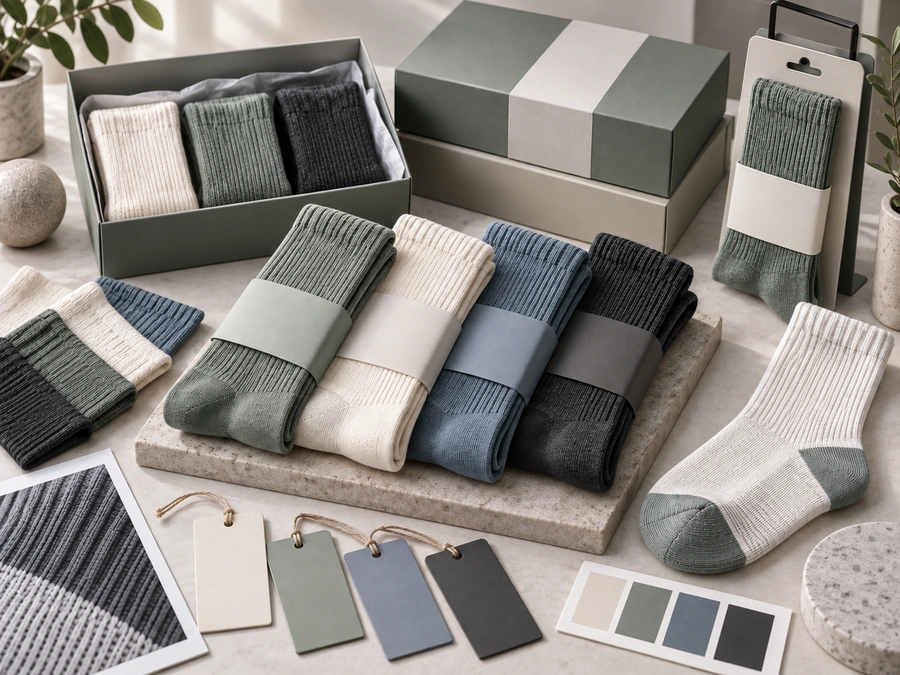
Strong growth usually comes from improving and extending what already works. Preserve approved product references so new orders, colour extensions and packaging changes start from a controlled baseline.
Share the target market, reference products, planned first styles, approximate quantity and launch timing. The project can be refined during sampling.
Build the first assortment around a clear use case and a manageable set of SKUs.
| Buying decision | Prepare this information | Use it to confirm |
|---|---|---|
| Core use | Identify the primary wearing environment and wearer. | Select the sock construction and grip needs around that use. |
| Range structure | List the first styles, colours and sizes. | Compare quantities per SKU before expanding the range. |
| Grip approval | Provide a sole photo or pattern reference. | Agree coverage, boundaries and a complete sample review. |
| Replenishment | Name the core SKUs expected to repeat. | Keep the approved sock and packaging revision together. |
Use the product route that matches your customer and order purpose. Keep its approved style, size allocation and packing reference together.
Keep a core range distinct from seasonal additions. Use your actual sales and sample feedback when deciding what to repeat.
| Collection decision | Planning record |
|---|---|
| Customer and use | Pilates, yoga or barre; member use, reception retail or wellness e-commerce. |
| Core assortment | Style reference, colour, size, pairs and packed presentation for each SKU. |
| Retail packaging | Hangtag, band or box; care and size text, barcode requirements and artwork version. |
| Replenishment | Usable and incoming stock by SKU, actual sales or issues, approved sample version and required arrival date. |
Separate range planning from branding production and structural development so every brief starts in the right place.
| Buying route | Best suited for | Typical studio or brand example | Next step |
|---|---|---|---|
| Private Label | Branding an existing Pilates or yoga grip sock silhouette with your colours, logo, size labels and retail packaging. | A studio or boutique launching 1–2 core grip styles with custom hangtags or belly bands. | Explore Pilates private label |
| Brand Collection Launch | Structuring a multi-SKU Pilates & wellness sock range—target customer, core vs seasonal colours, size mix, packaging and replenishment. | A wellness brand building a 3-style capsule range across XS–L with coordinated retail presentation. | Use the collection plan above |
| Advanced Studio Development | Changing knit construction, yarn blend, cuff fit/height or sole-grip layout from a reference sample or technical brief. | A brand submitting a physical sample to revise rib recovery, arch zones or custom grip placement before sampling. | Review advanced development |
Most wellness brands start with a tight core range of one crew style and one low-cut style in two or three signature colours before adding seasonal editions. Because each style, colour and size combination is produced as a separate line, fewer launch SKUs keep inventory focused and easier to replenish.
Private label applies your colours, logo and retail packaging to an existing studio sock base. A brand collection coordinates multiple silhouettes, colourways, size charts and packaging across drops. Custom development is used when you need to change the underlying knit structure, cuff construction or sole-grip layout from a reference sample.
For standard grip styles only, the minimum is 50 pairs per style, per colour and per size, with samples in 10 to 15 working days and bulk production in 12 to 16 working days. Five-toe styles, embroidery, special grip constructions and custom retail packaging are quoted separately, and shipping transit time is confirmed in the quotation.
Each approved SKU is archived with its physical signed-off sample, written specification, colour references, size chart and packed presentation. Repeat production starts from that approved reference rather than relying on a style name alone.