Reorder Pilates studio socks line by line, not as one total. Record what each style, colour and size line sold or issued since the last delivery, and change the size split to match. Do not copy the opening split. Send a reorder brief with the approved sample ID, quantities per line, any changes, the destination and the arrival date. When stock arrives, compare a few pairs from each line with the retained sample: colour, measurements, grip layout, labels and pack. Any change to yarn, construction, grip or size bands needs a new sample review.

This guide covers the repeat cycle for studio grip socks: tracking, size mix, the reorder brief and batch checks. The first order is covered in our first studio order guide, reorder timing and margins in the studio retail margin guide, and size labels in the sock size conversion chart. Wholesale terms are on the studio wholesale page; reorder quality is on quality and reorders.
For standard grip styles only, the minimum is 50 pairs per style, per colour and per size, samples take 10–15 working days and bulk production 12–16 working days from confirmed starts. Transport is separate, and production working days are not an arrival date. Other constructions are quoted per order. Inspection points, tolerances and any tests are agreed for each project; we publish no standard tolerances or test results.
1. Why studio reorders drift
Common reasons a second order does not match the first, or does not match demand:
- Repeating the opening split. The first order was a guess; the second can use real sales.
- Naming the style, not the version. "The lavender crew again" does not identify the approved yarn, artwork or pack.
- Unrecorded changes. A new logo file, label text or pack format sent informally.
- No arrival check. Differences found weeks later at the front desk are harder to resolve.
2. Keep a size ledger
A simple sheet with one row per style, colour and size line answers most reorder questions:
| Field | What to record | Why it matters |
|---|---|---|
| Line | Style, colour, size, approved sample ID. | Ties each count to one approved version. |
| Received | Pairs received per delivery and date. | The starting point for each period. |
| Sold | Pairs sold at reception or online. | The demand signal for retail. |
| Issued | Pairs given out for class use, member packs or as gifts. | Demand that never appears in sales. |
| Usable stock | Pairs on hand and saleable, plus any incoming. | What the reorder must top up. |
Keep retail sales, class issues and usable stock separate by size, as our studio assortment guidance recommends.
3. Review the size mix before reordering
Studios rarely sell every size in the opening proportions. Before each reorder:
- Compare shares. For each style and colour, compare each size's share of sales and issues with its share of the opening order.
- Look for the gaps. Note sizes that sold out early and sizes still on the shelf.
- Check fit feedback. If members often swap sizes, the band boundaries may need review on a new sample rather than a different split.
- Consider wider ranges. If men or larger feet are under-served, review the men's and unisex fit checklist before adding a band.
- Set quantities per line. Use expected weekly demand and the time until stock can arrive. Our reorder point method shows the calculation.
For standard grip styles, each line still needs at least 50 pairs. If a slow size would only reach that minimum with many months of cover, consider leaving it out of this reorder.
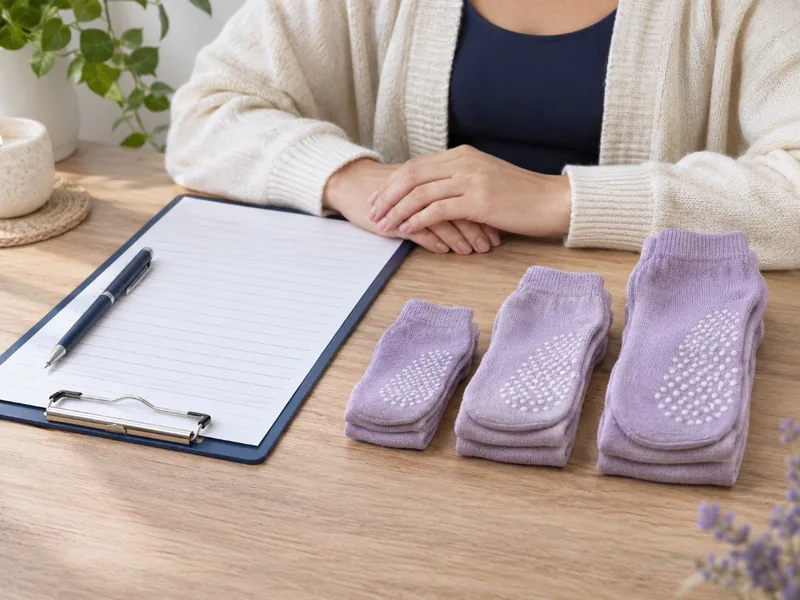
4. Send a complete reorder brief
| Item | Include | Confirm in the quotation |
|---|---|---|
| Version | Approved sample ID, written specification, artwork and pack version. | That the same version will be produced. |
| Quantities | Pairs per style, colour and size, from the ledger. | Minimums per line for each construction. |
| Changes | Every change listed explicitly: new colour, label, pack or size band. | Whether a new sample or checks are needed. |
| Delivery | Address, each location's split and the required arrival date. | Production schedule, freight method and transit estimate. |
Our studio reorder checklist lists the same records, and the studio quote brief (TXT) can be reused for repeat orders.
5. Check each batch against the sample
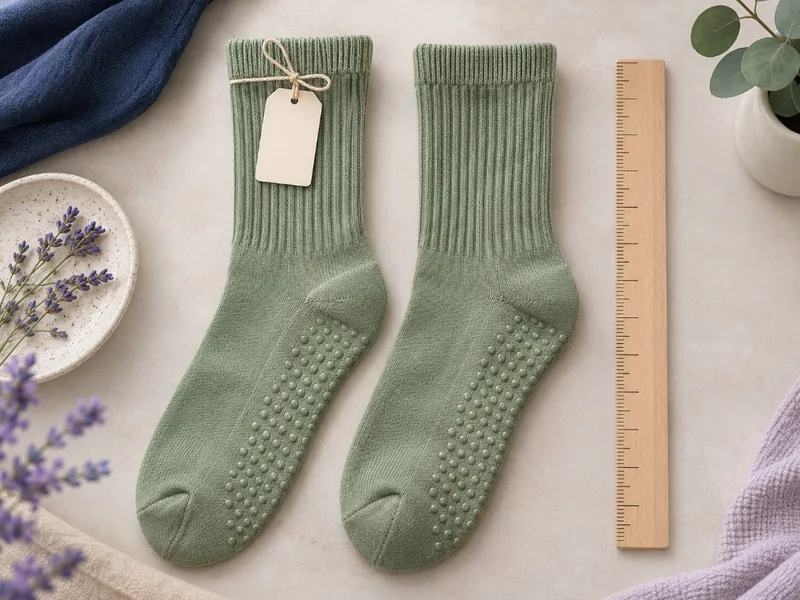
Keep at least one pair from each approved line as a retained reference. When a reorder arrives, take a few pairs from each line and compare:
- Colour: body, logo and grip shades against the retained pair in daylight.
- Measurements: foot length, leg length and cuff width at the agreed measure points, within the agreed tolerances.
- Grip layout: the complete sole pattern, including toe and heel zones, with nothing missing or displaced.
- Branding: logo position, size and readability.
- Labels and packs: size, care text, barcode and pack mix match the order.
These checks mirror the approval record on our quality and reorders page. Agree the measure points and tolerances when the first sample is approved, so the same rules apply at every reorder. Wash or grip tests are additional and apply only if agreed.
6. Repeat order or new version?
| Change | Usually treated as | What to do |
|---|---|---|
| Same style, colours, sizes and pack | Repeat order | Quote the approved version and check on arrival. |
| New colour on the same construction | New line | Approve the knitted shade before bulk. |
| New logo artwork or pack text | New version | Approve the artwork and a packed pair. |
| Yarn, construction or grip layout change | New version | New sample; recheck affected sizes and any agreed tests. |
| Size band boundaries change | New version | New size chart and fit samples at band edges. |
7. Several studios
For more than one location, keep a ledger per studio and send the split per site with the reorder. Decide whether stock is delivered centrally or to each studio, because that changes cartons, labels and freight. The studio buying plan covers allocation sheets and carton labels for multiple locations.
8. The styles these records apply to
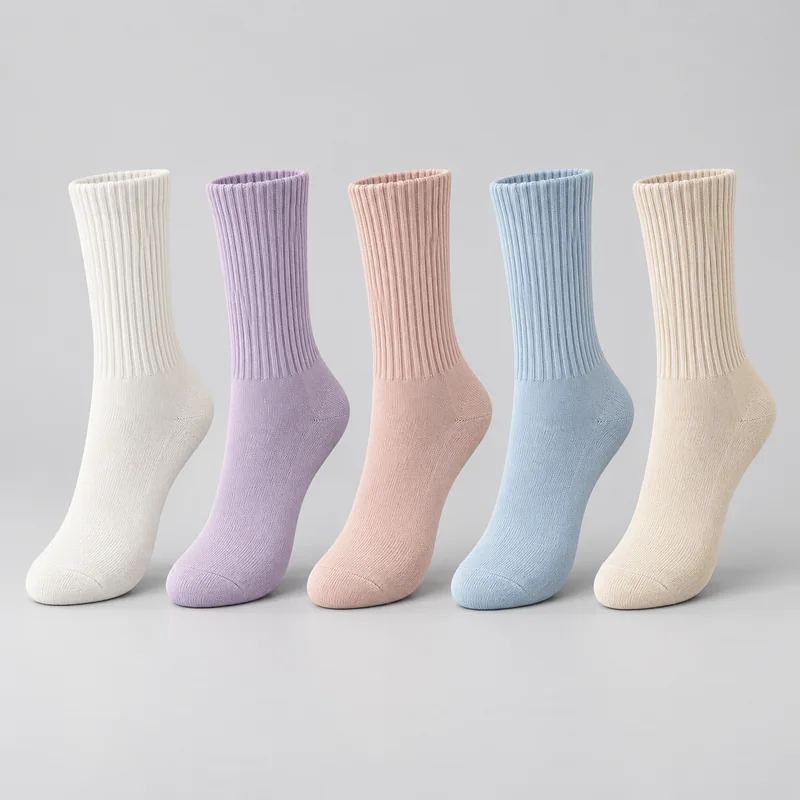
Custom Ribbed Crew Yoga Grip Socks
A closed-toe ribbed crew style with circular sole grip dots. Plan pastel colours, XS to L sizes and branded packaging for studio and wellness retail.
View Product Details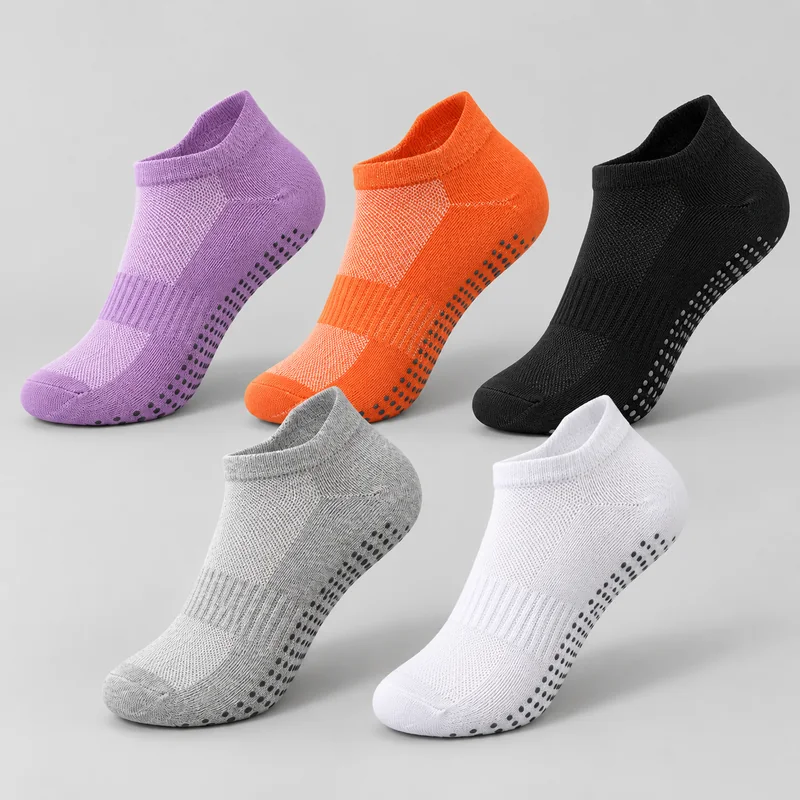
Custom Low-Cut Mesh Yoga Grip Socks
A low-cut style with mesh-knit zones, ribbed midfoot and circular sole grip dots. Develop custom colours, XS to L sizes and branded studio retail packs.
View Product Details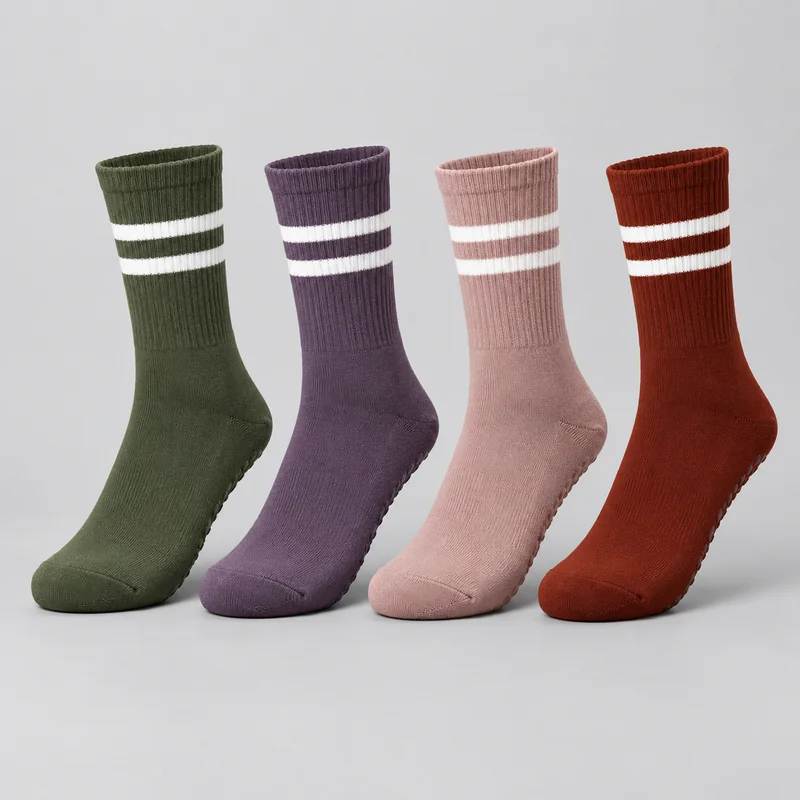
Custom Striped Crew Yoga Grip Socks
A ribbed crew style with two contrasting cuff stripes and circular sole grip dots. Plan custom colours, S to XL sizes and branded studio retail packs.
View Product DetailsEach style plans its own size range (XS to L on the ribbed crew and low-cut mesh styles, S to XL on the striped crew). Line its bands up by foot length if you sell several styles together.
Frequently asked questions
How often should a Pilates studio reorder grip socks?
There is no fixed interval. Reorder each line when its usable stock falls to the pairs you expect to sell or issue before new stock can arrive, plus a buffer, and check timing with each quotation.
Should we repeat the same size split as the first order?
No. Use the sales and issues recorded by size since the last delivery. The opening split was an estimate; the reorder can follow real demand.
What should a studio send to reorder?
The approved sample ID, specification, artwork and pack version, quantities per style, colour and size, any changes listed explicitly, the delivery address and the required arrival date.
How do we check that a reorder matches the first batch?
Compare a few pairs from each line with a retained approved pair: colour, agreed measurements, grip layout, branding, labels and pack. Agree measure points and tolerances when the first sample is approved.
Does a new colour need a new sample?
A new colour on the same construction is a new line, and its knitted shade should be approved before bulk. Changes to yarn, construction, grip layout or size bands need a new sample review.
Next steps
Review the reorder records on quality and reorders, plan replenishment on the studio wholesale page, and send your reorder brief through the quote form.