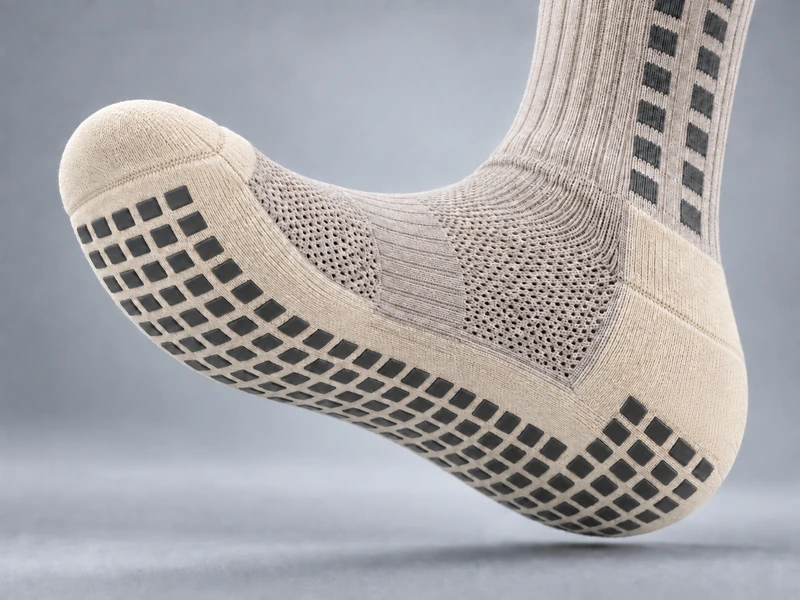
Macro sole detail
Show the grip area clearly so buyers can judge spacing, alignment, edge cleanliness and the relationship between grip and knit texture.
- Visual grip density
- Edge clearance from sock borders
- Clean placement on the sole
Understand grip material direction, coverage, pattern, placement and the factory checks that should support a repeatable product.
Good grip sock development is not just about adding dots to a sole. Coverage, spacing, edge clearance, grip orientation and sock structure all need to work together so the final product can be sampled, reviewed and repeated in bulk.
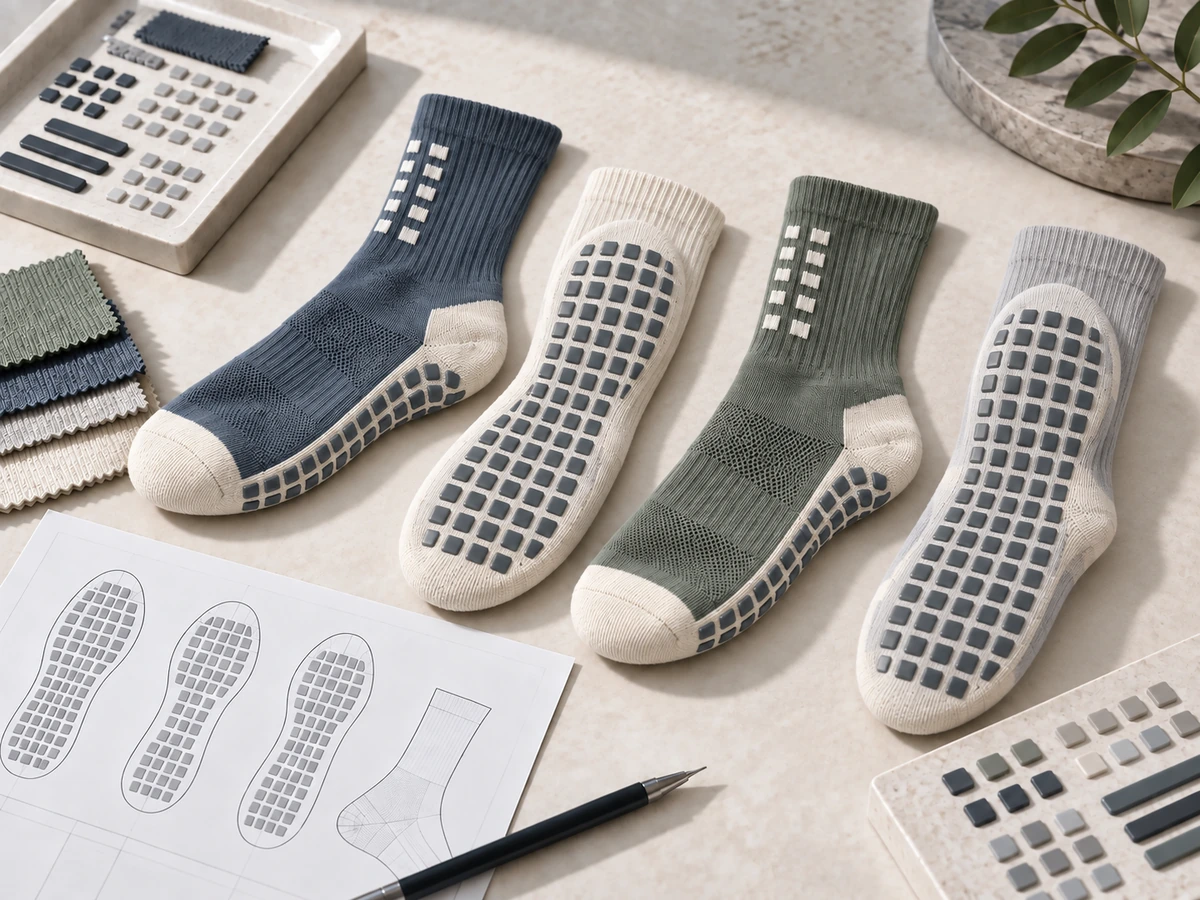
A practical B2B presentation should help buyers understand the sole pattern itself, how it sits on the sock, and how the concept is evaluated before bulk production.
Show the grip area clearly so buyers can judge spacing, alignment, edge cleanliness and the relationship between grip and knit texture.
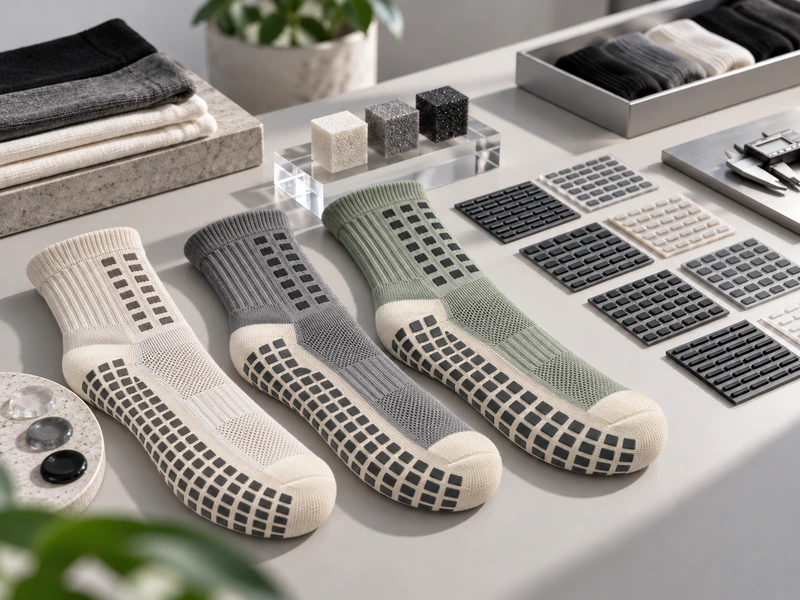
Different use cases may need different grip maps. Side-by-side views help explain full coverage versus more controlled zoning.
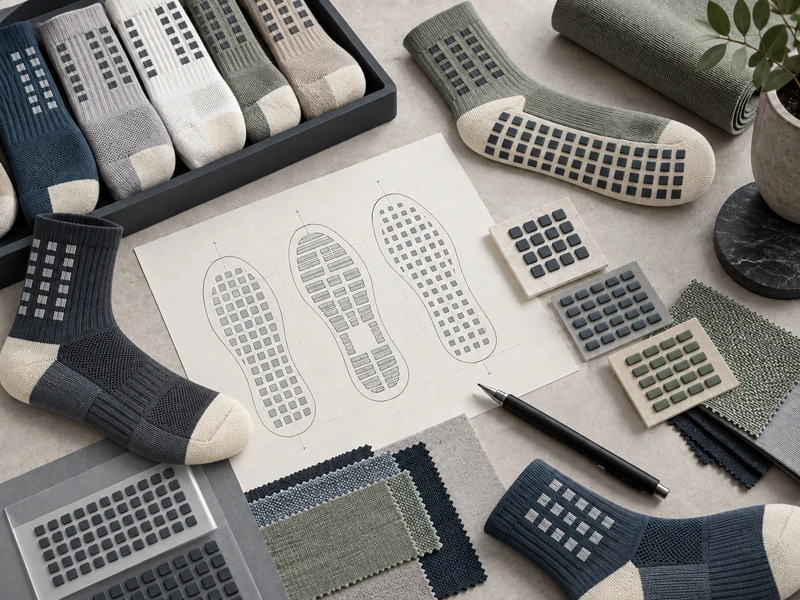
Present the project as an engineering and approval process, not just a finished-product image. This builds confidence around execution.
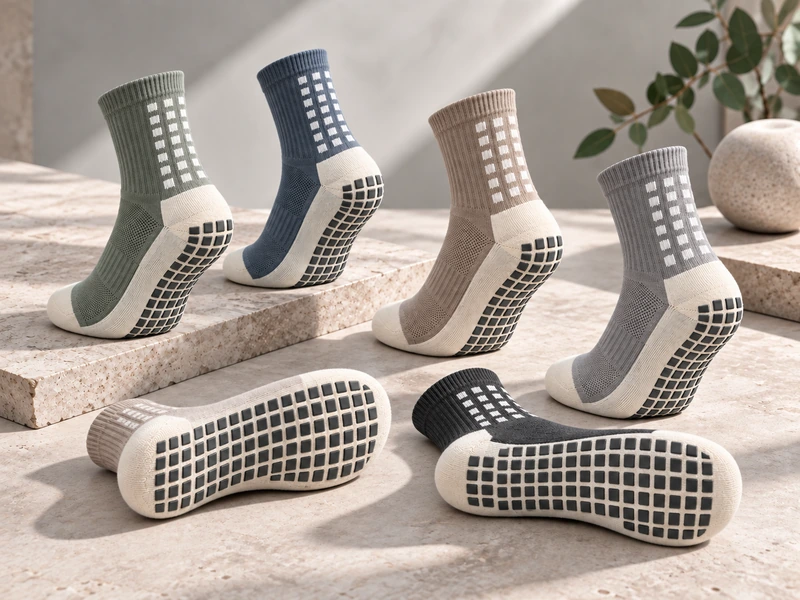
Use this page to guide a buyer from concept to approval. Keep the messaging practical: what can be adjusted, what needs testing and what the factory will check before bulk.
Buyers should be able to see a simple step-by-step path from concept confirmation to physical review. Use real production-oriented language and avoid unsupported performance claims.
Collect the target sole pattern, usage context and any visual requirements.
Plan coverage, spacing and orientation around the actual sock structure.
Produce a physical sample so the grip result can be checked in a realistic format.
Review placement consistency, appearance and edge cleanliness against the approved sample.
Use the approved version as the visual standard for repeatable production.
Review coverage and placement on a real sock sample before approving bulk production.
Share a sole reference or pattern idea. The team can review layout, coverage, spacing and how it suits the chosen sock structure.
Use a physical sample to check the entire sole, including toe and heel coverage where required. Approve the placement before the sample becomes the production reference.
No. Coverage should match the intended use, sock construction and buyer brief. Targeted zones and fuller coverage can be discussed during sampling.
Send the artwork and target size. The team can assess whether the design will remain legible and practical on the sole.
Send a reference image, product idea or target application and we can discuss suitable coverage, pattern direction and how the sample should be reviewed before bulk.